Campaign Learning Phase vs Real Performance Drop
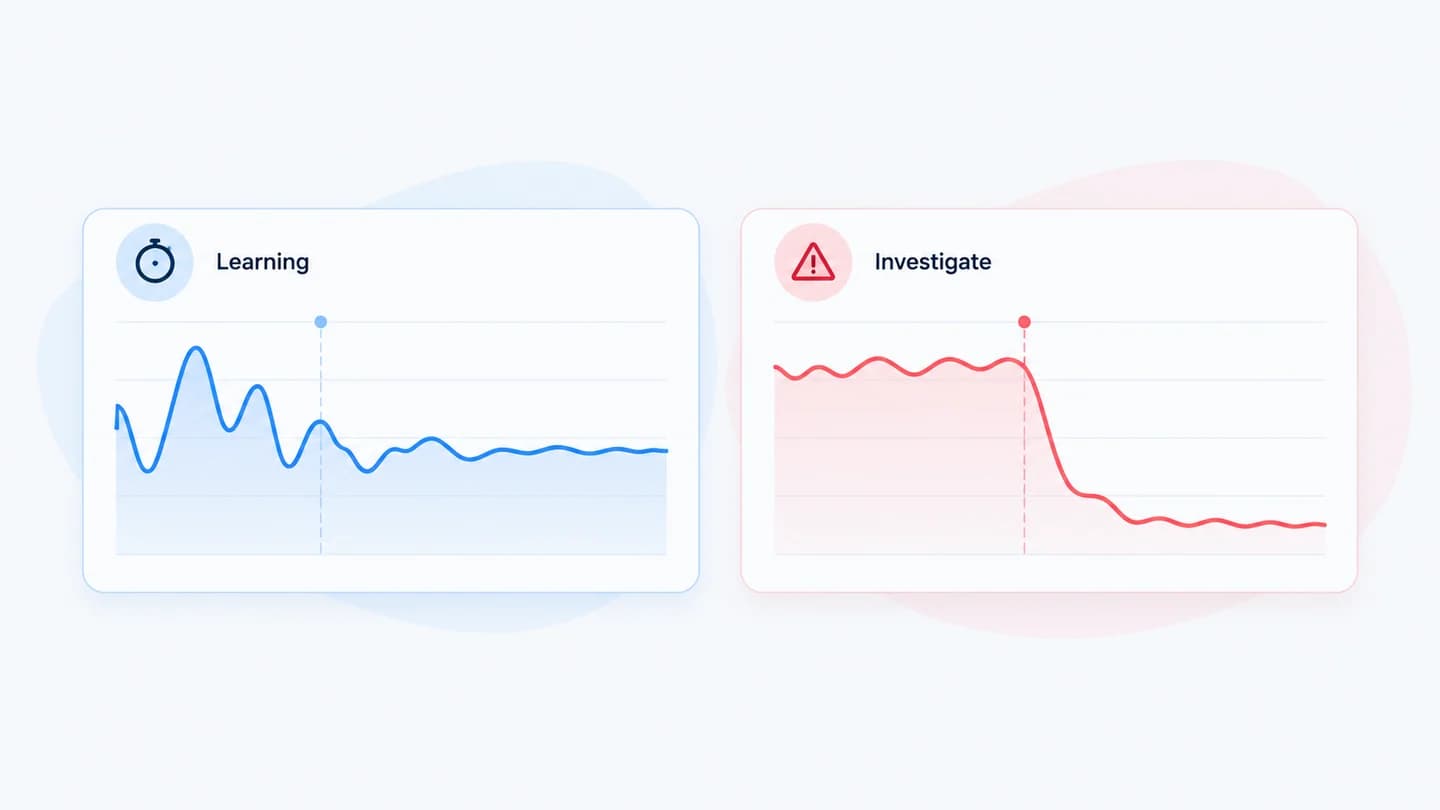
After a Meta Ads edit, performance often wobbles, and it's easy to mistake the learning phase for a real drop and "fix" a campaign that was simply re-optimizing. Telling the two apart saves you from resetting learning again.
What the learning phase is
When a campaign is new or significantly edited, Meta re-explores delivery to find efficient conversions. During this window, cost per lead and volume are unstable by design. It usually settles once the ad set gathers enough conversions.
The tell: did something change?
The single best question is what changed right before the dip?
- A recent edit (budget, audience, creative, optimization event): likely learning-phase instability. Give it time before judging.
- No edit, yet performance fell: more likely a real drop, and the cause is probably outside the campaign: the landing page, form, or tracking. Run the conversion drop diagnostic.
Don't reset learning to "fix" learning
Editing again during the learning phase restarts it. If the dip is learning, the fix is patience; if it's a real drop, the fix is upstream or on the page, not another campaign edit.
Example
Illustrative scenario. Cost per lead spiked two days after a creative swap, then drifted back toward normal by day four with no further changes. That arc is the learning phase, not a broken campaign. An extra edit on day two would have reset the clock.
Illustrative scenario. Cost per lead rose 30% on a Wednesday with no campaign edits in the previous two weeks. Clicks held. Form submits fell. With no edit to explain a learning reset, this is a real drop, and the funnel split points past the campaign to the landing page, where a new form version had gone live that morning.
A simple waiting rule
Before judging a change, decide how long you will wait and what would make you act sooner. A practical rule:
- Wait while the ad set shows a learning status and cost per lead is moving back toward its usual range.
- Act sooner if leads fall to near zero, if spend continues while leads stop, or if form submits drop on the site at the same time. Those point at something broken, and learning does not explain them.
- Write it down. Note the edit, the time, and your waiting window, so the next person looking at the dip knows it was expected.
How Quarkad helps
Quarkad timestamps every campaign change, so when performance moves it shows whether an edit preceded the dip (learning) or nothing changed and the break is elsewhere (a real incident), with the likely cause ranked.
Related
- How budget changes affect lead volume in Meta Ads
- Why your conversion rate dropped overnight
- Conversion drop diagnostic
FAQ
How long does the learning phase last? It varies by conversion volume; it ends when the ad set gathers enough conversions to stabilize. Judge performance after it exits, not during.
Can a campaign be in learning and also have a real drop? Yes. An edit can coincide with a broken page. If on site submits fell alongside the dip, check the page and form instead of assuming the learning phase explains everything.